
How To Clean and Maintain Your Aluminum Patio Cover
Outdoor structures endure harsh weather conditions throughout the year, which necessitates a specific care routine to protect your investment. In the Southwest, rain, wind, and intense sunlight exposure wear down the materials that protect your deck or patio. Without a proper plan to wash and inspect these areas, the structure will suffer damage from accumulated dirt, mold, and debris. Learning how to clean and maintain your patio cover will help you keep the area safe, clean, and ready for use while ensuring the quality and appearance of your outdoor extension for years.
Initial Structure Inspection
The maintenance process begins with a thorough inspection of the entire roof structure to identify any severe hidden damage or cracks. In a Southwest environment, extreme heat and dry air can significantly impact the structural integrity of your patio cover, particularly the sealants and fasteners. High temperatures can cause metal to expand and contract, which may eventually lead to loose bolts that compromise the strength of the unit. It is vital to check all connection points where the beams attach to the main wall of the house and tighten any loose hardware immediately to ensure the structure remains secure.
Additionally, the intense desert sun can cause sealants and caulking to become brittle or warp over time. You should carefully inspect the seals around the edges and joints to ensure they have not cracked or pulled away from the surface. If these seals fail, water can leak through during sudden monsoon rains, potentially causing internal damage. Replacing any failing sealant with high-quality, heat-resistant filler will create a necessary barrier against the elements.
Remove Dry Debris and Sand
Before applying water, you should use a soft broom to sweep leaves and dirt from the top surface. In desert climates, it is important to remove heavy branches or cactus spines with great care and focus to avoid scratching the paint. You must not drag sharp objects across the panels, as this will cause permanent deep scratches. Furthermore, clearing the area around the base of the posts prevents dirt and moisture buildup on the metal, which helps prevent rust from forming on the bottom of the poles.
Rinse and Wash Procedures
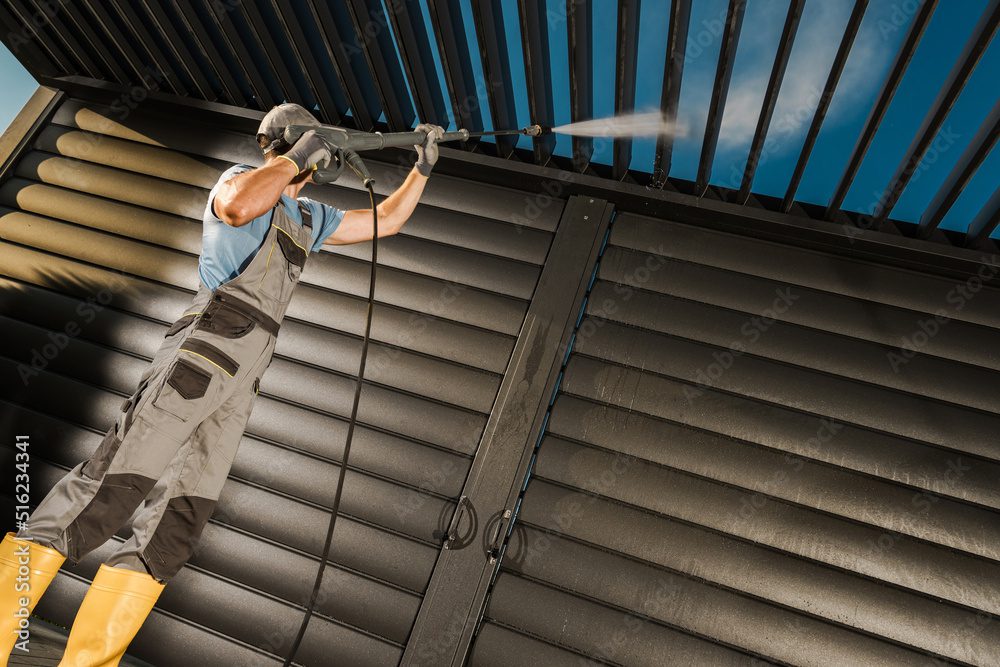
Once loose debris is removed, spray the entire top surface with a garden hose to loosen stuck surface dirt. Use a nozzle with moderate pressure to blast away grime, but do not use a high-pressure washer, as the force can dent the soft aluminum. Start at the top and move down to ensure the dirty water flows off effectively. It is also important to rinse the underside of the cover to remove spider webs and dust.
To deep clean, mix a mild dish soap with warm water in a large bucket. Do not use bleach or harsh acids, as these often strip the paint from metal. Using a soft-bristle brush or soft cloth, scrub the surface in a circular motion to lift dirt from the textured grain. Because the Southwest sun can cause soap to dry quickly on hot metal—leaving a film that looks worse than the original dirt—work in small sections and rinse each area with fresh water immediately after scrubbing. For tough green mold spots, a mixture of equal parts white vinegar and water can be sprayed on the area for 10 minutes before rinsing.
Aluminum Performance and Maintenance
Choosing high-quality aluminum patio covers, such as a duralum aluminum patio cover is an excellent investment for Southwest environments because the material naturally resists the rust and rot common to outdoor roofs. This material minimizes maintenance tasks and saves time for busy homeowners. To keep the structure looking brand new, it should be washed twice a year. Owners should also check for scratches on the paint that might expose raw metal to the air and apply touch-up paint to prevent oxidation and keep the look uniform.
Gutter System and Drainage
Maintaining the gutter system is essential to allow proper water flow and prevent damage to the structure. Clogged drains cause water to back up and overflow, which can damage the aluminum components over time. Use a hose to flush the downspouts and ensure water exits away from the foundation. During this process, check for leaks in the joints and secure any loose brackets to ensure the system can withstand heavy seasonal rain.
Final Seasonal Strategy
Living in a desert climate requires focusing on cleaning off dust and sand that accumulate throughout the year rather than preparing for snow. It is best to inspect and wash the patio cover at the start of each season, especially during the windy spring months when dust storms are common. Regularly trimming nearby desert-friendly plants will also reduce fallen leaves or cactus spines on the roof. With this consistent maintenance routine, you can prevent minor issues from escalating into costly repairs and enjoy a safe, inviting outdoor space for years to come.
By committing to this consistent maintenance routine, you can prevent minor issues from escalating into costly repairs or full replacements in the future. Simple efforts, such as clearing desert debris and performing regular inspections, significantly reduce the risk of structural damage while ensuring your outdoor extension remains a safe, inviting setting for relaxation and entertainment. With these tailored practices, you will preserve the quality and appearance of your home for years to come. If you are ready to enhance your backyard with a durable, low-maintenance solution, contact us today to learn more about our aluminum patio covers.
Tags: